Editor’s Note: This case study is based on a real implementation project. The retailer’s name has been anonymized to protect client confidentiality.
In today’s competitive retail environment, operational efficiency is key to profitability. For retailers in Latin America, operating in complex and dynamic markets, the challenge of manually updating thousands of prices is a constant burden. This process not only consumes valuable staff hours but also introduces the risk of errors that frustrate customers.
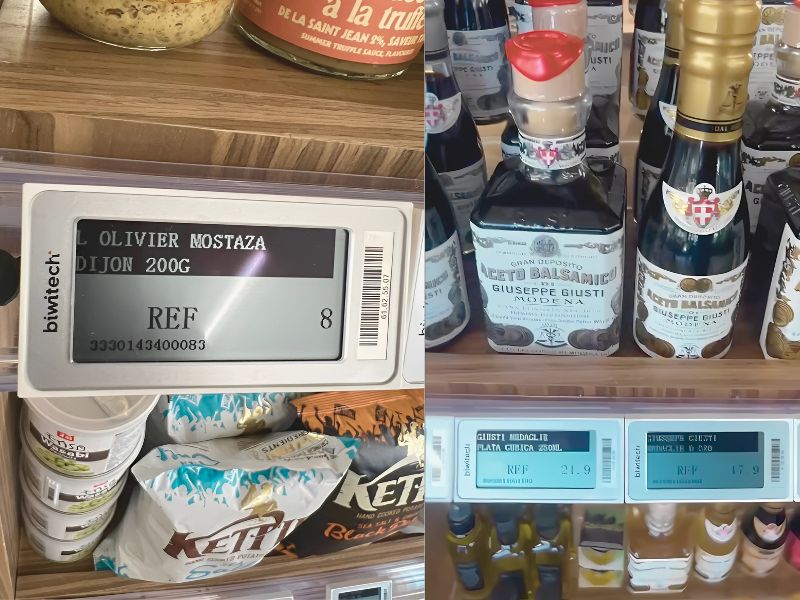
This case study shows how the implementation of electronic shelf labels (ESLs) powered by Biwitech’s SmartTag® solution thoroughly modernized store operations and delivered measurable ROI within weeks.
The Challenge: High Labor Costs and Pricing Errors
Before the modernization, the store’s staff spent an excessive amount of time on a repetitive task: replacing thousands of paper price tags every week. This situation created three main problems:
- High labor costs: Over 25 staff hours per week were lost to the manual printing and changing of price tags.
- Frequent errors: Mismatches between the shelf price and the POS system price led to customer complaints and compliance risks.
- Lack of flexibility: Executing promotions and dynamic pricing campaigns at scale was logistically impossible.
The Solution: Implementing Electronic Shelf Labels
To solve these challenges, the retailer implemented a scalable solution with Biwitech technology.
- Installation of 1,200+ SmartTag® ESLs in key aisles.
- Real-time synchronization with the retailer’s pricing system.
- Centralized control for managers to execute price changes and promotions in seconds.
- Energy-efficient displays designed for 24/7 operation without constant maintenance.
The Results: Accuracy, Efficiency, and Trust
The benefits were immediate and measurable. Within the first 90 days, the retailer reported:
- 100% pricing accuracy across all ESL-equipped departments.
- 25+ staff hours saved per week, previously dedicated to manual tasks.
- Achieve 95% faster promotion rollouts by cutting execution time from days to minutes.
- Improved customer trust, with a drastic reduction in checkout disputes.
According to industry reports, like those published by McKinsey on the future of retail, in-store task automation is a fundamental pillar for growth.
Conclusion: An Investment in Operational Intelligence
The deployment of more than 1,200 ESLs proved to be much more than a simple modernization. It was a strategic investment in operational intelligence that freed staff to focus on customer service, eliminated price discrepancies, and built a solid foundation for future retail innovation.
See how Biwitech SmartTag® can cut costs and modernize your store – Contact us for a consultation.

- How to Choose a Self-Service Kiosk for Your Retail Store: The Complete Guide
- Agentic Commerce: What It Is and Why Retailers Must Prepare Now
- Agentic Commerce: How AI Agents Are Replacing Traditional Shopping in 2026
- Phygital Retail in 2026: Where Self-Service and Augmented Reality Actually Deliver Value
- The Real ROI of AI in 2026: How U.S. Retailers Will Cut Costs, Reduce Friction, and Capture Market Share

This case shows how adopting electronic shelf labels can transform daily retail operations, saving both time and resources while boosting accuracy. But shelf labels are just one piece of the bigger picture in retail technology
For a deeper look at how to implement self-service and in-store technology without costly mistakes, I wrote “How to Implement Self-Service Without Failing”. It’s a practical guide for decision-makers exploring kiosks, digital signage, or POS systems who want to ensure smooth deployments and lasting customer satisfaction.
Leave a Reply